Support our educational content for free when you buy through links on our site. Learn more
🧩 Myer-Briggs Type Indicator: Your 2026 Guide to 16 Types

Ever feel like you’re speaking a different language than everyone else? You’re not alone. At Personality Types™, we’ve watched countless individuals transform their relationships and careers simply by decoding the Myers-Briggs Type Indicator (MBTI®). Unlike generic online quizzes that offer a fleeting label, the official MBTI® is a rigorously researched tool backed by over 70 years of data, designed to reveal your innate psychological preferences rather than just your current mood. In this comprehensive guide, we’ll not only break down the 16 unique personality types but also reveal why the official assessment with a certified practitioner is the only way to truly unlock your “best-fit” type. From navigating workplace dynamics to finding your perfect romantic match, we’ll show you how to stop guessing and start understanding the blueprint of your mind.
Key Takeaways
- Preferences, Not Traits: The MBTI® identifies your natural innate preferences for how you gain energy, process information, make decisions, and structure your life, not your skills or intelligence.
- 16 Distinct Types: Understanding the four dichotomies (E/I, S/N, T/F, J/P) unlocks the unique strengths and potential blind spots of all 16 personality types, from the strategic INTJ to the spontaneous ESFP.
- The Power of Feedback: Unlike free online tests, the official MBTI® assessment requires a feedback session with a certified practitioner to ensure accuracy and provide actionable, personalized insights.
- Universal Application: Whether you are seeking career clarity, improving team dynamics, or deepening personal relationships, type awareness offers a practical framework for growth and empathy.
- No “Best” Type: Every type is equally valuable; the goal is self-acceptance and leveraging your unique gifts rather than trying to fit a mold.
Table of Contents
- ⚡️ Quick Tips and Facts
- 📜 The Origins: How the Myers-Briggs Type Indicator Was Born
- 🧩 Decoding the 16 Personality Types: A Complete Breakdown
- 1. The Analysts (INTJ, INTP, ENTJ, ENTP)
- 2. The Diplomats (INFJ, INFP, ENFJ, ENFP)
- 3. The Sentinels (ISTJ, ISFJ, ESTJ, ESFJ)
- 4. The Explorers (ISTP, ISFP, ESTP, ESFP)
- 🔍 How the MBTI® Assessment Works: From Questions to Results
- 🆚 MBTI vs. Big Five: Which Personality Test is Right for You?
- 💼 MBTI in the Workplace: Career Paths, Team Dynamics, and Leadership
- ❤️ Love and Relationships: Finding Your Perfect Match with Type Theory
- 🚀 Accelerating Soft Skills Development with Type Awareness
- 🛡️ Accept No Imitations: 7 Strengths of the Original MBTI® Assessment
- 📊 Top Reports: Choosing the Right Feedback for Your Needs
- Interpretative Report for Individuals
- Team Report for Groups
- MBTI® Personal Impact Report
- MBTI + TKI: Conflict Resolution Insights
- MBTI + STRONG: Career Exploration
- MBTI + FIRO: Interpersonal Needs
- 🎓 Ready for MBTI® Certification? A Guide for Practitioners
- 🌟 Developing Self-Awareness to Unlock Your Full Potential
- ❓ Frequently Asked Questions About the Myers-Briggs Type Indicator
- 🔒 Privacy Preference Centre and Data Security
- Conclusion
- Recommended Links
- Reference Links
⚡️ Quick
Tips and Facts
Welcome, fellow explorers of the human psyche! Here at Personality Types™, we’ve spent countless hours diving deep into the fascinating world of personality assessments, and today, we’re shining our spotlight on a true titan: the Myers
-Briggs Type Indicator (MBTI®). If you’re wondering what is the best Myers-Briggs Type Indicator? 2024, you’ve come to the right place! This isn’
t just another quiz; it’s a powerful tool for self-discovery and understanding others, offering profound insights into your unique psychological preferences.
Here are some quick facts to get your cognitive gears turning:
- Developed by a Mother-Daughter Duo: Isabel Myers and Katharine Briggs, inspired by Carl Jung’s theory of psychological types, created the MBTI® during World War II. Talk about a dynamic duo! 🦸 ♀️🦸
♀️ - 16 Unique Personality Types: The MBTI® assessment categorizes individuals into one of 16 distinct types, each represented by a four-letter code. Think of it as a personalized
roadmap to your inner workings! - Not a Test, But an Indicator: We prefer to call it an “indicator” because there are no right or wrong answers, and no “best” type. It simply points to your natural
preferences, much like being right-handed or left-handed. ✅ - Focus on Preferences, Not Skills: The MBTI® doesn’t measure abilities, intelligence, or mental health. Instead, it highlights how you prefer to perceive
the world and make decisions. It’s all about your innate leanings! - Widely Used Globally: From Fortune 500 companies to universities and personal development workshops, the MBTI
® is one of the most popular personality assessments worldwide, helping millions understand themselves and others better. - Age Matters! While incredibly insightful, the official MBTI® tool is generally not suitable for individuals younger than 1
3 years old, primarily due to the reading capacity required to understand the questionnaire. For our younger adventurers (grades 2-12, especially ages 7-12), the MMTIC (Murphy-Meisgeier Type Indicator for Children) is the recommended alternative. It helps children understand themselves and gives parents and teachers valuable insights into different learning styles. You can find more information about M
MTIC from People Stripes. - Voluntary and Confidential: When taking the MBTI®, especially for young adults (ages 16-24), it’s crucial that participation is **
voluntary and results are confidential**. This ensures genuine answers and mitigates external pressures like peer influence or the desire to please authority figures.
📜 The Origins: How the Myers-Briggs Type Indicator Was Born
Every great journey has a beginning, and the story of the Myers-Briggs Type
Indicator is as captivating as the insights it provides! Imagine a time when the world was grappling with immense change – World War II was raging, and women were entering the workforce in unprecedented numbers. It was in this crucible of societal transformation that Katharine
Cook Briggs and her daughter, Isabel Myers, embarked on a mission that would forever change the landscape of personality psychology.
Inspired by the groundbreaking work of Swiss psychiatrist Carl Jung and his theory of psychological types, Katharine and Isabel believed that understanding individual
differences could foster greater harmony and productivity. Jung had proposed that seemingly random variations in human behavior are actually quite orderly and consistent, due to basic differences in the ways individuals prefer to use their perception and judgment.
However, Jung’s original
work was complex and academic. Katharine and Isabel’s genius lay in their ability to translate these intricate concepts into a practical, accessible tool that everyday people could use for self-understanding and personal growth. They dedicated decades of their lives to developing
, refining, and validating the questionnaire, driven by a desire to help people identify their natural strengths and find fulfilling roles, especially during a time when many were seeking purpose and direction.
As Isabel Briggs Myers herself eloquently put it, “The understanding of type
can make your perceptions clearer, your judgements sounder, and your life closer to your heart’s desire.” This quote truly encapsulates the spirit of their work – it wasn’t about labeling people, but empowering
them to live more authentically and effectively. Their dedication led to the creation of the MBTI® assessment, a testament to their vision and commitment to helping individuals unlock their potential.
🧩 Decoding the 16 Personality Types: A Complete Breakdown
Alright, buckle up, because this is where the magic happens! The Myers-Briggs Type Indicator dist
ills the vast tapestry of human personality into 16 distinct types, each a unique blend of four fundamental preferences. Think of these preferences as your mental superpowers – the ways you naturally orient yourself to the world.
As explained in the first YouTube video,
these four letters correspond to preferences in how individuals perceive the world and make decisions. [cite: #featured-video] Everyone uses both sides of each pair, but we tend to have a preference for one over the other. [cite: #featured-video]
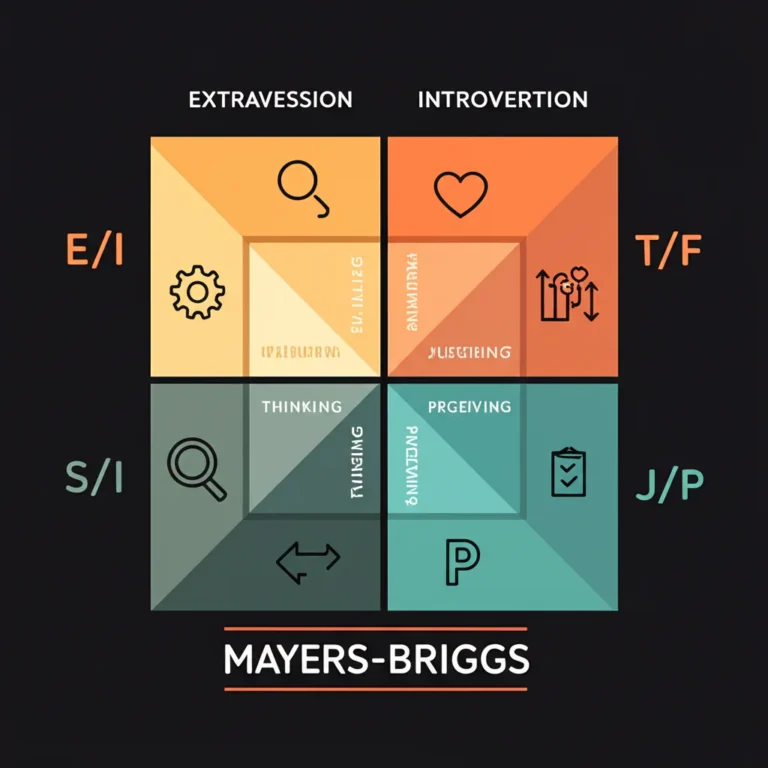
Let’s break down the four core dichotomies that form the bedrock of every MBTI® type:
- **Extraversion (E) vs. Introversion (I): How You Direct and Receive Energy
**
- Extraversion (E): You’re energized by interacting with the outer world, people, and activities. You often think out loud and gain energy from social engagement.
- Introversion (I):
You’re energized by your inner world of thoughts, ideas, and reflections. You often prefer quiet time and gain energy from solitude. - Our take: Neither is “better,” just different! An Extravert might thrive
at a bustling networking event, while an Introvert might prefer a deep conversation with one or two close friends. For more insights, check out our category on Introversion Vs Extroversion.
- Sensing (S) vs. Intuition (N): How You Take in Information
- Sensing (S): You focus on facts, details
, and what’s real and tangible, gathering information through your five senses. You appreciate practical applications and concrete experiences. [cite: #featured-video] - Intuition (N): You focus on patterns,
possibilities, meanings, and future implications. You’re drawn to abstract concepts and “reading between the lines.” [cite: #featured-video] - Our take: The video humorously notes that “Sensing” is
about the five senses, while “Intuition” is about patterns and concepts. [cite: #featured-video] Imagine an “S” type meticulously following a recipe, while an “N” type might improvise, envisioning a new culinary
creation!
- Thinking (T) vs. Feeling (F): How You Make Decisions
- Thinking (T): You make decisions based on logic, objective analysis, and truth. You prioritize fairness
and consistency, often detaching emotionally to make a rational choice. [cite: #featured-video] - Feeling (F): You make decisions based on values, personal impact, and harmony. You prioritize empathy, compassion
, and how decisions affect people. [cite: #featured-video] - Our take: The video highlights that “Thinking” is logical and rational, focused on “what makes sense,” while “Feeling” is about values and
“good/bad.” [cite: #featured-video] It’s the classic head vs. heart, but remember, both are vital!
- Judging (J) vs. Perceiving (P): How You Prefer to
Live Your Outer Life
- Judging (J): You prefer a planned, organized, and decisive approach to life. You like closure, structure, and making decisions. [cite: #featured-video]
Perceiving (P): You prefer a flexible, spontaneous, and adaptable approach to life. You like to keep options open and gather more information before deciding. [cite: #featured-video]
- Our take
: The video playfully suggests “P” types can appear disorganized and spontaneous, while “J” types might seem more organized and planned. [cite: #featured-video] We’ve all known that friend who plans every minute of a
trip (J) and the one who just goes with the flow (P)!
These four dichotomies combine to create your unique four-letter type. For example, an Introverted Ntuitive Thinking
Judging type is an INTJ.
The folks at 16Personalities.com, with their popular NERIS Type Explorer® (a free online assessment based on the MBTI framework), group these
16 types into four broader “Roles” based on two primary dichotomies. We find this a helpful way to grasp the overarching themes of each group:
1. The Analysts (INTJ, INTP, ENTJ, ENTP)
- Core Characteristics: These types are known for their rationality, impartiality, and intellectual excellence. They are often strategic thinkers, innovative problem-solvers,
and intellectually curious. - Dominant Preferences: Intuitive (N) and Thinking (T).
- Our Anecdote: We once worked with an ENTJ CEO who could dissect
a complex business problem into actionable steps in minutes. His team, including an INTP researcher, appreciated his decisive leadership while valuing the INTP’s deep, abstract analysis. It was a powerful combination of strategic vision and meticulous thought!
Types:**
- INTJ (Architect): Strategic, independent, visionary.
- INTP (Logician): Innovative, analytical, abstract.
- ENTJ (Commander):
Decisive, natural leader, strategic. - ENTP (Debater): Quick-witted, challenging, inventive.
2. The Diplomats (INFJ, INFP, ENFJ, ENFP)
- Core Characteristics: These types are celebrated for their empathy, diplomatic skills, and passionate idealism. They are often compassionate, insightful, and driven by a desire to make a positive impact
on the world. - Dominant Preferences: Intuitive (N) and Feeling (F).
- Our Anecdote: We remember an INFJ counselor who had an uncanny ability to
understand unspoken emotions, guiding clients with profound empathy. Her ENFP colleague, a vibrant life coach, brought an infectious enthusiasm and a knack for inspiring others to explore new possibilities. Together, they created a truly nurturing and empowering environment. - Types
: - INFJ (Advocate): Insightful, compassionate, principled.
- INFP (Mediator): Idealistic, creative, values-driven.
- ENFJ (Protagonist): Charismatic, inspiring, altruistic.
- ENFP (Campaigner): Enthusiastic, imaginative, social.
3. The Sentinels (ISTJ, ISFJ, ESTJ, ESFJ)
-
Core Characteristics: These types are known for their practicality and focus on order, security, and stability. They are often responsible, hardworking, and committed to upholding traditions and duties
. -
Dominant Preferences: Observant (S) and Judging (J).
-
Our Anecdote: We consulted with an ESTJ project manager who ran a tight ship –
every detail was accounted for, every deadline met. Her ISFJ team member was the quiet backbone, ensuring everyone felt supported and that the team’s needs were met with meticulous care. Their combined focus on structure and support made them incredibly effective. -
Types:
-
ISTJ (Logistician): Responsible, organized, traditional.
-
ISFJ (Defender): Nurturing, diligent, supportive.
-
ESTJ
(Executive): Efficient, authoritative, traditional. -
ESFJ (Consul): Sociable, caring, duty-bound.
4. The Explorers (ISTP, ISFP, ESTP, ESFP)
- Core Characteristics: These types are characterized by their spontaneity, ingenuity, and flexibility. They are often hands-on, adventurous, and live in the moment, adapting readily
to new situations. - Dominant Preferences: Observant (S) and Prospecting (P).
- Our Anecdote: We once observed an ESTP sales professional who could charm
anyone and adapt his pitch on the fly, closing deals with a natural flair. An ISFP artist we know embodies the “Explorer” spirit, constantly experimenting with new mediums and techniques, always living authentically in the present.
Types:**
- ISTP (Virtuoso): Practical, analytical, spontaneous.
- ISFP (Adventurer): Artistic, charming, flexible.
- ESTP (Entrepreneur): Energetic
, direct, action-oriented. - ESFP (Entertainer): Enthusiastic, spontaneous, social.
Here’s a quick reference table to summarize the 16 types and their core attributes:
| Type
| Role | Key Traits |
|---|---|
| INTJ | Analyst |
| INTP | Analyst |
| , abstract | |
| ENTJ | Analyst |
| ENTP | Analyst |
| INFJ | Diplomat |
| compassionate, principled | |
| INFP | Diplomat |
| ENFJ | Diplomat |
| ENFP | Diplomat |
| Enthusiastic, imaginative, social | |
| ISTJ | Sentinel |
| ISFJ | Sentinel |
| ESTJ | Sentinel |
| , traditional | |
| ESFJ | Sentinel |
| ISTP | Explorer |
| ISFP | Explorer |
| , flexible | |
| ESTP | Explorer |
| ESFP | Explorer |
Understanding these roles and types is your first step towards truly
leveraging the power of the MBTI®. Which role resonates most with you? Keep reading to find out how you can discover your own type!
🔍 How the MBTI® Assessment Works: From Questions to Results
So, you’re intrigued by the 16 types and wondering how exactly this whole “indicator” thing works? Excellent question! The official
MBTI® assessment isn’t a quick online quiz you take on a whim (though there are many free, unofficial versions out there, like the NERIS Type Explorer® from 16Personalities.com). It
‘s a carefully constructed psychological instrument designed to help you identify your innate preferences.
Here’s a step-by-step breakdown of how the MBTI® assessment typically unfolds:
- The Questionnaire: You’ll complete
a series of multiple-choice questions. These questions are designed to explore your natural inclinations across the four dichotomies: Extraversion/Introversion, Sensing/Intuition, Thinking/Feeling, and Judging/Perceiving. The questions are often
scenario-based, asking you how you would typically react or what you would prefer in certain situations.
- Important Note: As the Myers & Briggs Foundation emphasizes, it’s crucial to answer honestly, reflecting your natural preferences rather
than how you think you should be, or how you are at work versus at home. This is about you at your most authentic!
- Scoring and Initial Results: Once you complete the questionnaire, your
responses are scored. This process identifies your dominant preference in each of the four pairs, leading to your initial four-letter type. For example, if your scores lean towards Introversion, Intuition, Thinking, and Judging, your initial result would
be INTJ. - The Crucial Feedback Session with a Qualified Practitioner: This is where the official MBTI® assessment truly shines and differentiates itself from generic online tests. A certified MBTI® practitioner will guide
you through your results. This isn’t just about handing you a printout; it’s a dynamic, interactive session where:
-
You Validate Your Type: The practitioner will explain each preference and its implications. You’ll
discuss whether the identified type truly resonates with your self-perception and life experiences. It’s not uncommon for an initial result to be slightly off, and the practitioner helps you determine your “best-fit” type. Remember, the individual plays
a part in determining their own results. -
Deep Dive into Preferences: You’ll explore what each letter means for your communication style, decision-making, learning approach, and interactions with others. This
is where the real “aha!” moments happen! -
Contextualization: The practitioner can help you understand how your type plays out in different areas of your life – personal relationships, career choices, and even stress responses.
4
. Receiving Your Report: After the feedback session and confirming your best-fit type, you’ll receive a detailed report. These reports vary but typically include: -
A description of your four-letter type.
-
Insights into your strengths and potential areas for development.
-
Suggestions for communication, problem-solving, and career exploration.
-
Comparisons with other types to understand potential dynamics.
Why is
a qualified practitioner so important?
Without a proper feedback session, you might misinterpret your results or dismiss them entirely. A practitioner ensures you understand the nuances, resolve any ambiguities, and truly own your type. This expert guidance is a
cornerstone of the MBTI®’s effectiveness and why it’s backed by decades of research.
🆚 MBTI vs. Big Five: Which Personality Test is Right for You?
Ah, the age-old debate in the world of personality psychology! When you dive into self-assessment, you’ll inevitably encounter two giants
: the Myers-Briggs Type Indicator (MBTI®) and the Big Five (also known as the Five-Factor Model). Both aim to illuminate your personality, but they approach it from different angles, like two different lenses on the same fascinating
subject. So, which one is right for you? Let’s break it down!
The MBTI®: Your Preference Compass
As we’ve explored, the MBTI® focuses on preferences. It’
s built on Carl Jung’s theory that seemingly random human behavior is actually quite orderly, stemming from fundamental differences in how we gather information and make decisions.
Key Features of MBTI®:
-
Categorical: You are
one of 16 types. It places you into distinct “boxes” based on your dominant preferences (e.g., you are either an Extravert or an Introvert). -
Focus on Understanding: Its primary goal is to
help you understand how you operate – your natural inclinations, strengths, and potential blind spots. It’s excellent for self-awareness and personal growth. -
Jungian Roots: Deeply theoretical, rooted in psychological type
theory. -
Applications: Often used in personal development, team building, career counseling (Career Choices and Personality), and improving communication.
-
Anecdote: We’ve seen countless individuals have “aha!” moments when they realize their “quirks” are simply natural expressions of their type. “Oh, that’s why I always need to plan everything!”
exclaims a J-type, or “So, it’s okay that I need alone time to recharge!” sighs an I-type.
The Big Five: Your Trait Spectrum
The Big Five, on the other hand, is a
trait-based model that describes personality along five broad dimensions. Instead of putting you into a category, it places you on a spectrum for each trait.
The “OCEAN” of Personality:
- Open
ness to Experience: (Inventive/Curious vs. Consistent/Cautious) – How open you are to new ideas, experiences, and creativity. - Conscientiousness: (Efficient/Organized vs. Extravagant/Careless) – How organized, disciplined, and goal-oriented you are.
- Extraversion: (Outgoing/Energetic vs. Solitary/Reserved) – How much you seek external stimulation and social
interaction. (Sound familiar? This is similar to MBTI’s E/I, but measured on a continuum). - Agreeableness: (Friendly/Compassionate vs. Challenging/Detached) – How cooperative
, empathetic, and trusting you are. - Neuroticism: (Sensitive/Nervous vs. Secure/Confident) – How prone you are to emotional instability, anxiety, or negative emotions. (Sometimes referred to as Emotional Stability, with higher scores indicating less neuroticism).
Key Features of Big Five:
- Dimensional: You score high or low on each of the five traits, rather than being assigned a fixed type. You are a blend
of these traits. - Empirically Derived: Developed through statistical analysis of personality adjectives, making it highly research-backed and widely accepted in academic psychology.
- Focus on Description: Describes what your personality
is like in terms of these five broad traits. - Applications: Frequently used in academic research, personnel selection, and clinical psychology.
Resolving the Conflict: Different Tools for Different Jobs
So, which one should you trust
? It’s not about one being “better” than the other; it’s about their purpose and utility.
-
For Deep Self-Understanding and Personal Growth: The MBTI® often wins here. Its categorical nature
and focus on preferences provide a rich, narrative framework for understanding why you do what you do and how you interact with the world. It offers a language for self-discovery and improving relationships. -
For Research and Predicting Behavior: The Big Five is often preferred in academic and research settings due to its empirical basis and continuous scales, which lend themselves well to statistical analysis and predicting broad behavioral patterns.
Our Expert
Recommendation:
We, at Personality Types™, believe both have immense value.
- ✅ Use the MBTI® if you’re looking for a comprehensive framework to understand your natural preferences, improve communication, enhance team dynamics, and guide
personal development. It offers a powerful language for self-exploration and connecting with others on a deeper level. - ✅ Consider the Big Five if you’re interested in a more scientific, trait-based description of your personality
, particularly for academic or broad behavioral insights.
Many people find that the MBTI® provides a more intuitive and actionable understanding of their daily experiences, while the Big Five offers a robust, research-validated snapshot of their overall disposition. Why
not explore both and see which resonates more with your journey of self-discovery?
💼 MB
TI in the Workplace: Career Paths, Team Dynamics, and Leadership
Alright, let’s get down to business! The workplace is where our personalities truly shine – or sometimes, clash! That’s why the MBTI® assessment is
an incredibly powerful tool for navigating the professional landscape, from choosing the right career path to building high-performing teams and becoming a more effective leader. At Personality Types™, we’ve seen firsthand how understanding type can transform professional environments.
- Career Paths: Finding Your Professional Sweet Spot 🎯
Ever felt like you’re swimming upstream in your job? Or perhaps you’re just starting out and wondering what career would truly energize you? The MBTI® can
be a fantastic guide for Career Choices and Personality.
- Aligning with Your Strengths: Your MBTI® type highlights your natural strengths
and preferences. For example, an ISTJ (Logistician) might thrive in roles requiring meticulous attention to detail, organization, and adherence to established procedures, like accounting or data analysis. An ENFP (Campaigner),
with their enthusiasm and imagination, might excel in creative fields, marketing, or coaching. - Understanding Your Energy: Do you get energized by working with people (E) or by focusing on tasks independently (I)? Do you prefer concrete
facts (S) or abstract possibilities (N)? Knowing this can help you choose an environment that sustains, rather than drains, your energy. - Avoiding Mismatches: We’ve seen many individuals burn out in roles that fundamentally
conflict with their type. For instance, an INFP (Mediator) might struggle in a highly competitive, cutthroat sales environment, preferring roles that align with their values and allow for creative expression.
The official Myers-Briggs website
highlights the MBTI® as a tool for professional development and career guidance. It helps professionals leverage their type for better workplace interactions and decision-making. For young adults aged 16-
24, the MBTI® is “extremely useful” for career counseling.
2. Team Dynamics: Building a Cohesive Crew 🤝
Ever wonder why some teams click effortlessly while others feel
like a constant tug-of-war? Personality type plays a huge role! Understanding the MBTI® types within a team can dramatically improve collaboration and productivity.
- Appreciating Differences: Imagine a team with an ENT
J (Commander) who loves to make quick, decisive plans, and an INTP (Logician) who prefers to gather all possible data before committing. Without type awareness, this could lead to frustration. With it, the ENTJ learns
to value the INTP’s thoroughness, and the INTP understands the ENTJ’s need for direction. - Optimizing Roles: Knowing team members’ types allows leaders to assign tasks that play to individual strengths. An
ESFJ (Consul) might be excellent at fostering team cohesion and managing client relationships, while an ISTP (Virtuoso) might be the go-to person for troubleshooting complex technical issues. - Improving
Communication: Different types have different communication styles. A Thinking type might prefer direct, logical arguments, while a Feeling type might respond better to appeals to values and personal impact. Understanding this can prevent misunderstandings and foster more effective dialogue.
We cover this in depth in our Personality and Behavior section.
Many organizations use MBTI® team reports to help groups understand their collective strengths and potential
areas for growth. This leads to better problem-solving, reduced conflict, and a more harmonious work environment.
3. Leadership: Guiding with Authenticity and Impact 👑
Leadership isn’t a one-size-
fits-all endeavor. Your MBTI® type can inform your natural leadership style and help you develop into a more authentic and impactful leader.
- Leveraging Natural Strengths: An ESTJ (Executive) might be a natural at
setting clear expectations and enforcing policies, while an INFJ (Advocate) might excel at inspiring their team with a shared vision and fostering individual growth. - Developing Blind Spots: Understanding your type also helps you identify potential
areas for development. For example, an Introverted Thinking leader might need to consciously work on communicating their thought process more openly to their team, while an Extraverted Feeling leader might need to practice making tough decisions that prioritize logic
over harmony when necessary. - Adapting Your Approach: Effective leaders don’t just lead in one way; they adapt to the needs of their team and the situation. Type awareness helps you understand the preferences of your team members, allowing you
to tailor your communication, motivation, and delegation strategies for maximum impact.
In essence, the MBTI® provides a powerful framework for self-awareness in the professional realm. It’s not about boxing you in, but about liberating you to
perform at your best, collaborate effectively, and lead with confidence and authenticity.
❤️ Love and Relationships: Finding
Your Perfect Match with Type Theory
Let’s talk about matters of the heart! While the MBTI® isn’t a crystal ball for finding “the one,” it’s an incredibly insightful tool for understanding yourself and others in the intricate
dance of relationships. Here at Personality Types™, we’ve seen how type awareness can transform connections, turning potential conflicts into opportunities for growth. Dive into our Personality and Relationships category for even more insights!
The Magic of Understanding Differences ✨
Think about it: how many times have you scratched your head over your partner’s reaction, or felt misunderstood yourself? Often, these moments
stem from fundamental differences in our psychological preferences. The MBTI® gives us a language to articulate these differences, moving beyond “they just don’t get me” to “ah, they’re a Sensing type, so they focus on concrete details
, while I’m an Intuitive, seeing the big picture!”
- Communication is Key: An Extravert might process thoughts by talking them out, needing an immediate response, while an Introvert might need
time to reflect internally before sharing. Imagine the frustration if an Extravert pushes an Introvert for an instant answer, or if an Introvert feels unheard by an Extravert who dominates the conversation! Understanding these preferences helps partners adapt their communication styles
. - Conflict Resolution: When disagreements arise, a Thinking type might want to logically dissect the problem, while a Feeling type might prioritize emotional harmony and validate feelings. Knowing this allows couples to approach conflict with empathy
, ensuring both logical solutions and emotional needs are addressed. - Shared Activities & Quality Time: An Sensing type might enjoy practical, hands-on activities or simply enjoying the present moment, while an Intuitive type might
prefer discussing abstract ideas or planning future adventures. Recognizing these different preferences can help couples find activities that satisfy both, or at least appreciate each other’s unique ways of enjoying life. - Decision-Making Styles: A **Judging
** type might prefer to make decisions quickly and stick to them, while a Perceiving type might prefer to keep options open and gather more information. This can lead to friction when planning vacations or making big life choices. Type awareness encourages
compromise and respect for different approaches.
Beyond “Opposites Attract” (or Don’t!) 💖
While it’s often said that “opposites attract,” in reality, a healthy relationship benefits from both similarities
and complementary differences.
- Complementary Strengths: An ISTJ (Logistician) who is highly organized and detail-oriented might perfectly complement an ENFP (Campaigner) who is spontaneous and big-picture focused
. The ISTJ helps ground the ENFP’s ideas, while the ENFP encourages the ISTJ to explore new possibilities. - Shared Values: While preferences can differ, shared core values (often influenced by the Feeling preference)
can provide a strong foundation for a relationship. - Growth Opportunities: Understanding your partner’s type can also highlight areas where you can grow. Perhaps your Thinking preference means you sometimes overlook emotional nuances, and your **
Feeling** partner can help you develop that side of yourself.
Our Expert Tip: Don’t use the MBTI® as a rigid filter for dating! It’s a tool for understanding, not for judgment. Every type
can have a successful, loving relationship with any other type, provided there’s mutual respect, open communication, and a willingness to understand and appreciate differences. It’s about building bridges, not walls!
🚀 Accelerating Soft Skills Development with Type Awareness
In today’s fast-paced world, technical skills get you in the door, but soft skills
are what help you thrive. We’re talking about communication, collaboration, emotional intelligence, adaptability, and leadership – the interpersonal abilities that make you a valuable asset in any team or relationship. And guess what? Your MBTI® type is a
secret weapon in accelerating your soft skills development!
At Personality Types™, we firmly believe that self-awareness is the bedrock of personal growth. When you understand your natural preferences, you gain clarity on:
- Your inherent strengths that you can lean
into. - Your potential blind spots or areas where you might need to stretch yourself.
- How your actions and communication are perceived by others.
Let’s explore how type awareness supercharges your soft skills:
- Enhanced Communication 🗣️
- Understanding Your Style: An Extraverted Thinking (ET) type might naturally be direct and assertive, while an Introverted Feeling (IF) type might be more indirect and value harmony
. Knowing your own style helps you articulate your thoughts more effectively. - Adapting to Others: When you recognize that your colleague is a Sensing (S) type who prefers concrete examples, you’ll provide data and facts.
If your manager is an Intuitive (N) type who loves big-picture ideas, you’ll lead with vision. This adaptability is a hallmark of excellent communication. - Conflict Resolution: As we touched upon in relationships
, understanding how Thinking (T) and Feeling (F) preferences approach conflict can de-escalate tension and lead to more productive resolutions. You learn to appreciate that a logical argument isn’t always the most effective approach, and
sometimes, validating emotions comes first.
2. Superior Collaboration and Teamwork 🤝
- Leveraging Diverse Strengths: A team composed of different types brings a rich array of perspectives. An ISTJ (Logistician)
ensures details are covered, while an ENFP (Campaigner) brings creative ideas. Type awareness helps teams consciously utilize these diverse strengths rather than letting them become sources of friction. - Role Clarity: Understanding type can help teams
naturally gravitate towards roles that align with their preferences, leading to more engaged and productive teamwork. - Empathy and Appreciation: When you understand why someone behaves the way they do (e.g., “They’re a Perceiving type, so they need flexibility, not rigid deadlines”), it fosters empathy and appreciation for their contribution, even if it differs from your own.
3. Boosting Emotional Intelligence (EQ) ❤️ 🩹
- Self-Aware
ness: The MBTI® is fundamentally a tool for self-awareness. By understanding your own emotional triggers, stress responses, and how you process feelings (or prefer not to!), you develop a stronger sense of self. - Social
Awareness: When you learn about other types, you gain insight into how others might experience emotions, react to situations, and what motivates them. This builds your capacity for empathy and understanding diverse perspectives. - Relationship Management: With enhanced
self and social awareness, you’re better equipped to manage interpersonal dynamics, build rapport, and navigate complex social situations with grace.
4. Adaptability and Problem-Solving 🔄
- Diverse Approaches: A team
with a mix of Judging (J) and Perceiving (P) types can approach problems from both structured and flexible angles, leading to more comprehensive solutions. - Openness to New Ideas: Understanding that Intuitive (N) types naturally seek possibilities and innovation can encourage Sensing (S) types to be more open to abstract ideas, and vice-versa.
- Resilience: When you understand your typical stress reactions based on your type,
you can develop proactive strategies to manage stress and bounce back more quickly.
In essence, the MBTI® provides a personalized roadmap for developing the soft skills that are crucial for success in every aspect of life. It’s about moving beyond
simply having these skills to truly mastering them by aligning them with your authentic self.
🛡️ Accept No Imitations: 7 Strengths of the Original MBTI® Assessment
In the vast ocean of personality assessments, it’s easy to get lost in a sea of imitators. While free online quizzes can
be fun and offer a glimpse into type theory (like the popular NERIS Type Explorer® from 16Personalities.com), they are not the same as the official, rigorously developed Myers-Briggs Type Indicator (MBTI®) assessment. Here at Personality Types™, we champion authenticity and reliability, and we want you to understand why the original MBTI® stands head and shoulders above the rest.
The official Myers-Briggs® website highlights unique
features that differentiate it from other personality tools. It focuses on identifying individual preferences rather than skills or abilities.
Here are 7 undeniable strengths of the original MBTI® assessment:
1
. Backed by Decades of Research and Development: This isn’t some fly-by-night questionnaire! The MBTI® has undergone over 70 years of rigorous research and refinement, with extensive studies on its reliability
and validity. It’s continually updated and improved based on psychological best practices. This robust foundation is something imitators simply cannot replicate.
2. Focus on Preferences, Not Traits: Unlike many other assessments that measure traits on a spectrum (like the Big Five), the MBTI® focuses on innate preferences. It helps you understand your natural way of being, rather than how you might adapt your behavior to external demands. This distinction is crucial for authentic self-discovery.
3.
Developed by Certified Practitioners: The official MBTI® experience includes a crucial feedback session with a qualified, certified practitioner. This expert guidance ensures you understand your results, confirm your “best-fit” type, and explore the nuances of what
your preferences mean for your life. This personalized interaction is invaluable and absent from most free online tests.
4. Comprehensive and Actionable Reports: The official reports are incredibly detailed and go far beyond just your four-letter code. They provide in
-depth insights into your communication style, decision-making process, learning preferences, and potential areas for growth. These aren’t just descriptions; they’re roadmaps for action.
5. Ethical Use and Confidentiality:
The MBTI® community places a strong emphasis on ethical administration. Results are always voluntary and confidential, ensuring that individuals feel safe to explore their true preferences without fear of judgment or misuse. This commitment to individual agency is paramount
.
6. Global Standard for Self-Awareness: The MBTI® is recognized and utilized by millions worldwide across diverse cultures and industries. Its consistent framework provides a common language for understanding human behavior, fostering greater empathy and collaboration on
a global scale.
7. Empowerment Through Self-Affirmation: The MBTI® doesn’t label you; it helps you affirm who you are. It highlights your strengths and validates your unique way of interacting
with the world. This self-affirmation can be incredibly empowering, leading to increased confidence and a clearer sense of purpose.
When you invest in the official MBTI® assessment, you’re not just getting a test; you’re
gaining access to a profound tool for self-understanding, backed by extensive research and delivered with expert guidance. Don’t settle for less when it comes to understanding the most complex and fascinating subject: yourself!
📊 Top Reports: Choosing the Right Feedback for Your Needs
Once you’ve taken the MBTI® assessment and had your crucial
feedback session with a certified practitioner, the journey doesn’t end there! The official MBTI® offers a suite of comprehensive reports designed to provide tailored insights for various aspects of your life. At Personality Types™, we help clients navigate these options to ensure
they get the most relevant and actionable feedback. Think of these reports as specialized lenses, each offering a unique perspective on your type.
Here’s a look at some of the top reports available:
Interpretative Report for Individuals
This is often the starting point for most individuals. It’s your personal deep dive into your MBTI® type.
- What it offers: A detailed explanation of your four-letter type, including how each preference manifests in your daily life
. It covers your strengths, potential areas for development, communication style, and how you approach decision-making. - Benefits: Provides a solid foundation for self-understanding, personal growth, and improving interpersonal relationships. It’s excellent
for anyone seeking to understand themselves better. - Our Take: This report is like your personal user manual. It helps you understand why you do what you do, and how you can leverage your natural gifts.
Team Report
for Groups
Designed specifically for groups, this report helps teams understand their collective dynamics.
- What it offers: A summary of the MBTI® types within a team, highlighting the team’s overall strengths, potential challenges, and how different
types contribute to the group’s effectiveness. It often includes strategies for improving communication and collaboration. - Benefits: Enhances team cohesion, reduces conflict, improves communication, and helps optimize team performance by leveraging diverse strengths.
Our Take: Essential for any team looking to move beyond individual personalities and truly function as a high-performing unit. We’ve seen this report transform dysfunctional teams into collaborative powerhouses!
MBTI® Personal Impact Report
This
report focuses on how your type influences your leadership style and professional interactions.
- What it offers: Insights into how your MBTI® preferences impact your leadership approach, influence style, and overall professional presence. It provides strategies for maximizing
your impact and navigating workplace challenges. - Benefits: Ideal for leaders, managers, and professionals looking to refine their leadership skills, improve their influence, and understand their professional brand.
- Our Take: If you’re in
a leadership role or aspire to one, this report is a game-changer. It helps you lead authentically and effectively.
MBTI + TKI: Conflict Resolution Insights
This powerful combination pairs the MBTI® with the Thomas
-Kilmann Conflict Mode Instrument (TKI).
- What it offers: You get your MBTI® type insights alongside your preferred conflict-handling styles (e.g., competing, collaborating, compromising, avoiding, accommodating). It
shows how your personality type might influence your approach to conflict. - Benefits: Provides a deeper understanding of your conflict behavior, helps you adapt your style for more effective conflict resolution, and improves interpersonal dynamics during disagreements.
Our Take: Conflict is inevitable, but how you handle it defines your relationships. This combined report is invaluable for anyone seeking to master the art of constructive conflict.
MBTI + STRONG: Career Exploration
This pairing combines your MBTI® type
with the Strong Interest Inventory® (STRONG).
- What it offers: Your MBTI® results are integrated with your vocational interests, providing a comprehensive view of potential career paths that align with both your personality preferences and your passions
. - Benefits: Excellent for career counseling, career changes, or students exploring their future. It helps identify fulfilling career options and educational paths.
- Our Take: A fantastic duo for anyone at a career crossroads or
simply wanting to ensure their professional life aligns with their authentic self. It’s like having a personalized career coach in a report! - 👉 Shop Strong Interest Inventory on: The Myers-Briggs Company Official Website
MBTI + FIRO: Interpersonal Needs
This combination integrates the MBTI® with the Fundamental Interpersonal Relations Orientation
™ (FIRO®) assessment.
-
What it offers: Insights into your MBTI® type and your fundamental interpersonal needs regarding inclusion, control, and affection. It reveals how you prefer to give and receive these behaviors.
-
Benefits: Deepens understanding of your social interactions, improves relationship dynamics, and helps you navigate group settings more effectively by understanding your core interpersonal needs.
-
Our Take: If you’ve ever wondered why you connect
with some people effortlessly and struggle with others, this report can provide profound answers. It’s a key to unlocking smoother interpersonal relationships.
Choosing the right report depends on your specific goals. Whether you’re aiming for personal growth, team
development, or career clarity, there’s an MBTI® report designed to illuminate your path.
🎓
Ready for MBTI® Certification? A Guide for Practitioners
Are you a coach, HR professional, consultant, or educator looking to add a powerful, globally recognized tool to your arsenal? Then becoming a certified MBTI® practitioner might be
your next big leap! At Personality Types™, we’ve seen countless professionals transform their practice and impact by gaining this certification. It’s not just about administering a questionnaire; it’s about mastering the art of type interpretation and facilitating profound
self-discovery for others.
Why Get Certified? The Practitioner’s Edge 🌟
While many free online personality quizzes exist, the true power and ethical application of the MBTI® assessment lie in the hands of a certified professional
. Here’s why certification is a game-changer:
- Ethical and Responsible Use: Certification ensures you understand the ethical guidelines for administering and interpreting the MBTI®, preventing misuse and ensuring a positive experience for clients.
Deep Theoretical Understanding: You’ll gain a comprehensive grasp of Jungian psychological type theory, the foundation of the MBTI®, allowing you to explain the nuances beyond the four letters.
- Mastering the Feedback Session: This is the
heart of the MBTI® experience. Certification trains you to conduct effective feedback sessions, helping individuals discover their “best-fit” type and truly understand its implications. Remember, the individual plays a part in determining their own results. - Access to Official Materials: Only certified practitioners can purchase and administer the official MBTI® assessments and reports, ensuring you’re using the most reliable and validated tools available.
- Credibility and Professional Development
: Becoming certified enhances your professional credibility, opening doors to new opportunities in coaching, consulting, training, and organizational development. - Joining a Global Community: You become part of a network of dedicated professionals committed to helping others understand themselves and
improve their lives.
The Certification Journey: What to Expect 🗺️
The path to MBTI® certification typically involves a structured training program offered by authorized providers, such as The Myers-Briggs Company.
- **
Foundation Course:** This intensive course (often 4-5 days, or spread out over several weeks online) covers:
- The history and theory behind the MBTI® instrument.
- In-depth exploration of the
four dichotomies and 16 types. - Ethical guidelines and best practices for administration.
- Hands-on practice with interpreting results and conducting feedback sessions.
- Understanding the various MBTI® reports
and how to use them effectively.
- Pre-Course Work: You’ll typically complete some reading and possibly take the MBTI® assessment yourself before the course begins, allowing you to experience it firsthand.
- Post
-Course Requirements: Some programs may include follow-up assignments, case studies, or mentorship to solidify your learning and ensure you’re confident in your ability to apply the MBTI® effectively. - Continuing Education: The
world of personality psychology is always evolving. Certified practitioners are encouraged to engage in continuing education to stay updated on research and best practices.
Is it worth the investment? Absolutely! For professionals dedicated to helping individuals and teams thrive, MB
TI® certification is an investment that pays dividends in enhanced client outcomes, expanded professional capabilities, and a deeper understanding of human behavior. It’s truly an advanced user’s pathway to unlocking profound insights.
🌟 Developing Self-Awareness to Unlock Your Full Potential
At Personality Types™, we believe that the journey to unlocking your full potential begins with a single, crucial
step: self-awareness. It’s not just a buzzword; it’s the bedrock upon which personal growth, effective communication, and genuine fulfillment are built. And guess what? The Myers-Briggs Type Indicator (MBTI®) is an unparalleled tool for illuminating that path to self-awareness.
Why Self-Awareness is Your Superpower 💪
Imagine trying to navigate a complex maze blindfolded. That’s a
bit like trying to live your life without understanding your own inner workings. Self-awareness is the ability to understand your own emotions, thoughts, values, strengths, and weaknesses, and how they influence your behavior.
When you’re truly self-
aware, you can:
- Make Better Decisions: You understand what truly motivates you, leading to choices that align with your authentic self.
- Improve Relationships: By understanding your own communication style and emotional reactions, you can better
navigate interactions with others. - Manage Stress Effectively: You recognize your triggers and develop coping mechanisms that work for your personality.
- Set Realistic Goals: You play to your strengths and acknowledge areas where you might need
support or development. - Find Greater Fulfillment: You pursue paths that genuinely energize and satisfy you, rather than conforming to external expectations.
How the MBTI® Illuminates Your Inner Landscape 💡
The MBTI® assessment
doesn’t just give you a four-letter code; it provides a comprehensive framework for understanding your unique psychological preferences. This understanding is a direct conduit to deeper self-awareness.
- Clarifying Your Preferences: The MBTI® helps
you identify your natural leanings in how you get energy (E/I), take in information (S/N), make decisions (T/F), and prefer to live your outer life (J/P). This clarity is profound. For
example, an Introvert might realize why they feel drained after too much social interaction, and instead of feeling guilty, they learn to honor their need for solitude. - Validating Your “Quirks”: Many
people discover that aspects of their personality they once considered “flaws” are simply natural expressions of their type. An Intuitive type might stop feeling “scatterbrained” and start appreciating their ability to see big-picture connections.
This validation is incredibly empowering. - Understanding Your Strengths: Each MBTI® type comes with a unique set of strengths. By recognizing these, you can consciously leverage them in your career, relationships, and personal projects. The
MBTI® helps professionals leverage their type for better workplace interactions and decision-making. - Identifying Growth Opportunities: Self-awareness isn’t just about celebrating strengths; it’s also about acknowledging areas where
you might need to stretch or develop. For instance, a Thinking type might recognize the need to develop their emotional intelligence, while a Judging type might work on being more adaptable and open to spontaneity. - G
aining Perspective on Others: When you understand your own type, you naturally start to understand the preferences of others. This leads to greater empathy and improved communication, as you learn to appreciate different ways of seeing the world.
As Isabel Briggs Myers herself
stated, the understanding of type can make your perceptions clearer, your judgments sounder, and your life closer to your heart’s desire. This is the essence of unlocking your full potential – living a life that is truly
aligned with who you are. The MBTI® is not just an assessment; it’s a powerful catalyst for a journey of lifelong self-discovery and empowerment.
❓ Frequently Asked Questions About the Myers-Briggs Type Indicator
We hear a lot of questions about the MBTI® here at Personality Types™, and we love answering them! It
shows a healthy curiosity about self-understanding. Let’s tackle some of the most common queries you might have about this fascinating assessment.
Q1: Is the MBTI® a “real” scientific test?
A:
This is a fantastic and common question! The MBTI® is a psychometric instrument designed to indicate psychological preferences. It is based on Carl Jung’s theory of psychological types and has undergone extensive research for reliability and validity over decades
. While it’s widely used and valued for personal and professional development, some academic psychologists prefer trait-based models like the Big Five for research due to their empirical derivation.
- Our Take: It
‘s a highly reliable and valid indicator of preferences, providing a rich framework for self-understanding. It’s not a diagnostic tool for mental health, nor does it measure skills or intelligence. Its strength lies in its ability to
provide a language for introspection and interpersonal understanding.
Q2: Can my MBTI® type change over time?
A: Your core MBTI® preferences are considered innate and stable throughout your life, much like being
naturally right-handed or left-handed. However, your behavior can certainly change and adapt based on life experiences, maturity, and personal development. You might learn to use your less preferred functions more effectively.
- Our
Take: While your “best-fit” type typically remains consistent, your understanding and expression of that type can evolve. We often see people “grow into” their type, becoming more balanced and integrated over time.
Q3: How
old do you have to be to take the MBTI®?
A: The official MBTI® tool is generally not suitable for individuals younger than 13 years old, primarily because they need the reading capacity to understand the questionnaire. For children in grades 2–12 (ages 7–18), especially those aged 7–12, the MMTIC (Murphy-Meisgeier Type Indicator for Children) is recommended
.
- Our Take: It’s crucial to respect these age guidelines. For younger individuals, personality is still developing, and the cognitive demands of the MBTI® might not yield accurate results. The
MMTIC is a fantastic alternative for younger explorers!
Q4: Are there “good” or “bad” MBTI® types?
A: Absolutely not! This is a fundamental principle of type theory. Every
MBTI® type has unique strengths and potential challenges. There is no “best” or “worst” type. The goal is to understand and appreciate your own type, and the types of others, for greater effectiveness and harmony.
- Our
Take: Thinking one type is superior is a classic misunderstanding. The beauty of the MBTI® is its ability to highlight the value of diversity in human preferences. Imagine a world where everyone was the same type – how boring and inefficient that
would be!
Q5: Can I take the MBTI® online for free?
A: You can find many free online personality tests that are based on the MBTI® framework, such as the popular NERIS
Type Explorer® from 16Personalities.com. However, these are not the official MBTI® assessment. The official assessment requires administration by a certified practitioner and typically involves a fee.
*
Our Take: While free tests can be a fun starting point, they lack the rigor, depth, and crucial feedback session provided by a certified practitioner. For a truly accurate “best-fit” type and comprehensive understanding, we always
recommend the official assessment.
Q6: What’s the difference between the MBTI® and the 16Personalities test?
A: The 16Personalities test, branded as **NERIS Type Explorer®
**, is a free online assessment that uses the MBTI® framework (the four dichotomies and 16 types) but adds a fifth dimension (Assertive vs. Turbulent). While it’s a popular and
engaging tool, it is not the official MBTI® assessment developed by The Myers-Briggs Company.
- Our Take: 16Personalities is a great introduction to type theory and can be a fun way to explore your
potential type. However, for the most accurate and in-depth understanding, guided by a professional, the official MBTI® is the way to go. It’s like the difference between a high-quality replica and the original masterpiece.
Q7: How can the MBTI® help me in my daily life?
A: The insights from the MBTI® can be applied to virtually every aspect of your life! It can help you:
- Improve communication
with family, friends, and colleagues. - Understand your natural learning style.
- Choose a career path that aligns with your strengths.
- Navigate conflicts more effectively.
- Boost your self-confidence by affirming your unique gifts
. - Develop greater empathy for others.
- Manage stress and energy more efficiently.
- Ultimately, lead a life more aligned with your “heart’s desire.”
- Our
Take: The MBTI® is a tool for lifelong learning and growth. The more you engage with its insights, the more profound its impact on your daily life will be!
🔒 Privacy Preference Centre and Data Security
In our increasingly digital world, discussions about personality assessments naturally lead to important questions about privacy and data security. At Personality Types™, we understand that your personal information is, well, *
personal*! When engaging with any assessment, especially one as insightful as the MBTI®, it’s crucial to know how your data is handled.
The official providers of the MBTI® assessment, such as The Myers-Briggs Company,
place a high priority on data privacy and ethical use. They adhere to strict regulations and best practices to ensure your information is protected.
Here’s what you should know and look for:
-
Transparency is Key: Reputable assessment
providers will have a clear and accessible Privacy Policy or Privacy Preference Centre. This document outlines exactly what data is collected, how it’s used, who it’s shared with (if anyone), and for what purpose. Always
take a moment to review these policies. -
Voluntary Participation: As emphasized earlier, participation in the MBTI® assessment should always be voluntary. You should never feel coerced or pressured to share your results.
-
Confidentiality of Results: Your individual MBTI® results are considered confidential. When used in organizational settings (e.g., for team building), individual results are typically only shared with the individual themselves
and, with their explicit consent, potentially with a certified practitioner or team leader. Aggregate, anonymized data might be used for research, but never individual, identifiable results without permission. -
Data Encryption and Security Measures: Look for assurances
that your data is stored securely using industry-standard encryption and other cybersecurity measures to prevent unauthorized access. -
Consent Management: A robust Privacy Preference Centre will allow you to manage your consent preferences, such as opting in or out of certain
data uses or marketing communications. This gives you control over your personal information. -
Third-Party Sharing: Understand if your data is shared with any third parties. If so, for what purpose, and what are their privacy standards
? Official providers are typically very transparent about this.
Our Expert Recommendation:
Before taking any online personality assessment, official or unofficial, always:
- ✅ Check for a clear Privacy Policy. If you can’t find one, proceed
with caution. - ✅ Understand how your data will be used.
- ✅ Ensure your participation is voluntary and results are confidential.
- ❌ Avoid sites that seem to prioritize data harvesting over genuine insight.
Your
journey of self-discovery should feel safe and secure. The reputable providers of the MBTI® assessment understand this and are committed to protecting your privacy every step of the way.
Conclusion

We’ve taken quite the journey through the labyrinth of human personality, haven’t we? From the historical roots of Katharine Briggs and Isabel Myers to the intricate dance of the 16 types, we’ve explored how the Myers-Briggs Type Indicator (MBTI®) serves as more than just a four-letter label—it’s a compass for self-discovery, a bridge for better communication, and a toolkit for professional growth.
To recap our earlier narrative: remember how we wondered if your type could change? We’ve confirmed that while your core preferences are as stable as your natural handedness, your behavior and skills can evolve beautifully over time. You aren’t trapped in a box; you’re equipped with a map to navigate it with confidence. And regarding the “best” type? We’ve settled that debate once and for all: there is no best type, only the type that is authentically you.
The Verdict: Is the MBTI® Worth It?
If you’re weighing the value of the official MBTI® assessment against the myriad of free online quizzes, here is our confident recommendation from the team at Personality Types™:
✅ The Positives of the Official MBTI®:
- Depth & Nuance: It goes beyond surface-level traits to uncover deep-seated preferences.
- Expert Guidance: The mandatory feedback session with a certified practitioner ensures you don’t misinterpret your results.
- Actionable Insights: The reports provide concrete strategies for career, relationships, and leadership.
- Ethical Standards: Rigorous data privacy and a focus on voluntary, confidential participation.
- Proven Track Record: Decades of research and global adoption by top organizations.
❌ The Negatives (or rather, considerations):
- Cost: It requires an investment, unlike free online alternatives.
- Access: You cannot simply “take it” online without a practitioner; it requires a guided process.
- Not a Diagnostic Tool: It doesn’t measure mental health, intelligence, or skills, which some might mistakenly expect.
Our Final Recommendation:
If you are looking for a fun, quick snapshot, free tools like the NERIS Type Explorer® are a great starting point. However, if you are serious about unlocking your full potential, resolving deep-seated conflicts, or making pivotal career decisions, the official MBTI® assessment is the superior choice. The value lies not just in the result, but in the transformative process of understanding why you are the way you are. Don’t settle for a photocopy of the masterpiece; experience the original.
Recommended Links
Ready to dive deeper or get your official assessment? Here are our top picks for books, tools, and resources to continue your journey.
📚 Essential Reading for Type Enthusiasts
- Gifts Differing: Understanding Personality Type by Isabel Briggs Myers & Peter B. Myers
The definitive guide written by the creators themselves. A must-read for understanding theory.
👉 Shop on Amazon: Gifts Differing: Understanding Personality Type - Please Understand Me II: Temperament, Character, Intelligence by David Keirsey
Connects MBTI types to the ancient four temperaments, offering a unique perspective on behavior.
👉 Shop on Amazon: Please Understand Me II - The 16 Personalities: A Guide to Understanding Your Type (Various Authors)
Great for quick references and practical applications of the 16 types.
👉 Shop on Amazon: 16 Personalities Books
🛠️ Official Assessments & Tools
- The Myers-Briggs Company
The official source for the MBTI® assessment, certification, and reports.
Visit Official Website: The Myers-Briggs Company - 16Personalities (NERIS Type Explorer®)
A popular free alternative based on the MBTI framework, great for initial exploration.
Visit Official Website: 16Personalities - Murphy-Meisgeier Type Indicator for Children (MMTIC)
The recommended assessment for children (ages 7-12).
Learn More: People Stripes – MTIC Info
🤝 Career & Relationship Resources
- Career Choices and Personality
Explore how your type aligns with your dream career.
Read More: Career Choices and Personality - Personality and Relationships
Navigate love and friendship with type awareness.
Read More: Personality and Relationships
Reference Links
For those who love to verify facts and dig into the source material, here are the authoritative sources that back up our insights:
- The Myers & Briggs Foundation
The non-profit organization dedicated to the development and promotion of the MBTI® instrument and Jungian type theory.
Visit: Myers & Briggs Foundation - The Myers-Briggs Company
The official publisher and administrator of the MBTI® assessment, offering research, tools, and certification.
Visit: The Myers-Briggs Company - 16Personalities
Source for the NERIS Type Explorer® and extensive free resources on personality types.
Visit: 16Personalities - Carl Jung’s Psychological Types
The foundational text by Carl Jung that inspired the MBTI® framework.
Learn More: Psychological Types – Stanford Encyclopedia of Philosophy - Big Five Personality Traits (OCEAN)
For comparative research on the Five-Factor Model.
Learn More: Big Five Personality Traits – Verywell Mind
Frequently Asked Questions
We’ve covered a lot of ground, but we know you might still have lingering questions. Let’s tackle the most common ones with the depth they deserve.
Are Myers-Briggs personality types fixed or can they change over time?
H4: The Stability of Core Preferences
Your MBTI® type is based on innate preferences, much like being right-handed or left-handed. These preferences are generally stable throughout your life. You don’t “switch” from being an Introvert to an Extravert. However, this doesn’t mean you can’t learn new skills! As you mature, you can develop your “less preferred” functions. For example, an Introvert can learn to be more socially assertive when necessary, but they will still recharge best in solitude. The type remains the same, but your expression of it becomes more balanced and flexible.
How can understanding Myers-Briggs types improve communication?
H4: Speaking the Same Language
Miscommunication often stems from different processing styles. An Sensing (S) type might need concrete facts and details, while an Intuitive (N) type prefers the big picture and possibilities. If an S-type feels an N-type is “vague,” and the N-type feels the S-type is “nitpicky,” conflict arises. Understanding these preferences allows you to adapt your message. You learn to provide data for the S-types and vision for the N-types. Similarly, knowing a Thinking (T) colleague values logic over emotion helps you frame arguments effectively, while a Feling (F) colleague needs to know how a decision impacts people. It’s about translating your intent into a language the other person understands.
What is the difference between introversion and extroversion in Myers-Briggs?
H4: Where You Get Your Energy
In the MBTI® framework, Introversion (I) and Extraversion (E) are not about shyness or sociability; they are about energy direction.
- Extraverts gain energy from the outer world of people, activities, and objects. They tend to think out loud and prefer breadth of interaction.
- Introverts gain energy from their inner world of thoughts, ideas, and reflections. They tend to process internally before speaking and prefer depth of interaction.
An extravert might feel drained after a long day of solitude, while an introvert might feel drained after a long day of socializing. Both can be social, but their “battery” recharges differently.
How do Myers-Briggs personality types affect relationships?
H4: Harmony Through Understanding
Relationships thrive on understanding, not just attraction. Type theory helps couples navigate differences that often cause friction. For instance, a Judging (J) partner who loves planning and closure might clash with a Perceiving (P) partner who prefers flexibility and spontaneity. Without type awareness, the J might see the P as irresponsible, and the P might see the J as controlling. With awareness, they can appreciate that the J brings structure and the P brings adaptability. It transforms “You’re so annoying” into “Ah, you’re a P, you need to keep your options open. Let’s find a middle ground.”
Can the Myers-Briggs test predict career success?
H4: Alignment vs. Prediction
The MBTI® cannot predict career success in the sense of guaranteeing a promotion or a high salary. Success depends on skills, effort, opportunity, and many other factors. However, the MBTI® is an excellent tool for career alignment. It helps you identify careers that align with your natural preferences, making you more likely to feel engaged, energized, and fulfilled. An ENFP might struggle in a rigid, repetitive data-entry role but thrive in a creative, people-focused marketing position. It guides you toward environments where you can naturally excel, rather than predicting the outcome.
How accurate is the Myers-Briggs Type Indicator?
H4: Reliability and Validity
The official MBTI® assessment has undergone decades of research to establish its reliability (consistency of results) and validity (measuring what it claims to measure). Studies show that about 75-85% of people get the same four-letter type when retested after a few weeks. However, accuracy also depends on the individual answering honestly and the presence of a certified practitioner to help confirm the “best-fit” type. Free online quizzes often lack this validation step and may yield less accurate results due to their simplified nature.
What are the 16 Myers-Briggs personality types?
H4: The Four Groups
The 16 types are formed by combining four dichotomies:
- Analysts (NT): INTJ, INTP, ENTJ, ENTP (Rational, strategic, innovative)
- Diplomats (NF): INFJ, INFP, ENFJ, ENFP (Empathetic, idealistic, inspiring)
- Sentinels (SJ): ISTJ, ISFJ, ESTJ, ESFJ (Practical, organized, protective)
- Explorers (SP): ISTP, ISFP, ESTP, ESFP (Spontaneous, adaptable, hands-on)
Each type has a unique combination of strengths and potential blind spots.
What are some common misconceptions about the Myers-Briggs Type Indicator and its use in popular culture?
H4: Debunking the Myths
- Myth: “There is a best type.” Fact: All types are equally valuable; diversity is key.
- Myth: “It measures skills or intelligence.” Fact: It measures preferences, not abilities.
- Myth: “You can’t change your type.” Fact: Your core type is stable, but your behavior and skills can grow.
- Myth: “It’s just a fun quiz.” Fact: The official MBTI® is a rigorous psychometric tool used in professional settings.
- Myth: “It predicts the future.” Fact: It describes current preferences, not destiny.
Can the Myers-Briggs Type Indicator be used in educational settings to help students understand their learning styles?
H4: Tailoring Education
Absolutely! While the standard MBTI® is for ages 13+, the MMTIC (Murphy-Meisgeier Type Indicator for Children) is specifically designed for students in grades 2–12. It helps educators understand how different students prefer to learn. For example, Sensing students might prefer step-by-step instructions and concrete examples, while Intuitive students might thrive on open-ended projects and theoretical concepts. By understanding these preferences, teachers can differentiate instruction to reach all learners effectively.
How does the Myers-Briggs Type Indicator differ from other psychological frameworks, such as the Big Five personality traits?
H4: Preferences vs. Traits
The primary difference lies in the model of measurement.
- MBTI®: Categorical. It places you into one of 16 distinct types based on preferences (e.g., you are either an I or an E). It focuses on how you operate.
- Big Five: Dimensional. It places you on a spectrum for five traits (Openess, Conscientiousness, Extraversion, Agreeableness, Neuroticism). It focuses on what your personality is like in terms of intensity.
The MBTI® is often preferred for personal development and team building due to its narrative framework, while the Big Five is favored in academic research for its statistical robustness.
Are there any criticisms or controversies surrounding the use of the Myers-Briggs Type Indicator?
H4: Addressing the Critiques
Critics often point to:
- Binary Nature: The forced choice between I/E, S/N, T/F, J/P ignores the fact that many people fall near the middle of the spectrum.
- Test-Retest Reliability: Some studies suggest a significant percentage of people get a different result when retested.
- Lack of Predictive Validity: It doesn’t always predict job performance as well as other measures.
- Barnum Effect: Some argue the descriptions are vague enough to apply to anyone.
Our Perspective: While valid, these criticisms often stem from a misunderstanding of the tool’s purpose. The MBTI® is designed to identify preferences, not to be a diagnostic test. The “binary” nature is a simplification for practical application, and the feedback session with a practitioner is crucial to address the nuances and ensure the “best-fit” type is accurate.
What is the history and development of the Myers-Briggs Type Indicator and its underlying theory?
H4: From Jung to the Modern Era
The foundation was laid by Carl Jung in his 1921 book Psychological Types, where he proposed that human behavior is orderly and consistent based on basic differences in perception and judgment. In the 1940s, Katharine Cook Briggs and her daughter Isabel Briggs Myers took Jung’s theory and developed a practical questionnaire to help people understand themselves, especially during World War II when women were entering the workforce. They spent decades refining the instrument, and it was first published in 1962. Today, it is one of the most widely used personality assessments in the world.
How can I use the Myers-Briggs Type Indicator to improve my relationships and communication with others?
H4: Practical Application
- Identify Your Type: Start by taking the official assessment or a reliable free test to understand your own preferences.
- Learn About Others: Ask friends, family, and colleagues about their types or observe their behaviors to guess their preferences.
- Adapt Your Style: If you know someone is a Feling (F) type, lead with empathy. If they are a Thinking (T) type, lead with logic.
- Validate Differences: Instead of judging a Perceiving (P) partner for being disorganized, appreciate their flexibility.
- Communicate Intent: Explain why you do what you do. “I need to plan this because I’m a Judging type” helps others understand your need for structure.
By using type as a lens, you move from judgment to curiosity, fostering deeper, more resilient relationships.