Support our educational content for free when you buy through links on our site. Learn more
Discover Your True Self: The Ultimate MBTI Personality Types Test Guide (2026) 🔍

Did you know that over 190 million people have taken an MBTI personality test variant, with many describing the results as “eerily accurate”? Whether you’re a curious newbie or a seasoned type enthusiast, understanding your MBTI personality type can unlock hidden strengths, improve your relationships, and even supercharge your career. But with so many tests and interpretations out there, how do you know which one truly fits you?
In this comprehensive guide, we’ll unravel the history, science, and practical uses of the MBTI Personality Types Test. From decoding the 16 unique types to mastering team dynamics and debunking myths about type changes, we’ve got you covered. Plus, stay tuned for real-life stories that show how MBTI insights transformed lives—yours could be next!
Key Takeaways
- MBTI sorts personalities into 16 distinct types based on four preference pairs, offering a user-friendly framework for self-discovery.
- The test is widely used in corporate, educational, and personal settings but should be seen as a tool for insight, not a definitive label.
- Understanding your type can enhance communication, relationships, and career satisfaction by highlighting natural strengths and blind spots.
- MBTI’s scientific validity is debated, but its popularity endures due to its accessibility and practical applications.
- You’ll find step-by-step guidance on taking the test, interpreting results, and using MBTI to improve your life and work.
Ready to decode your personality puzzle? Let’s dive in!
Table of Contents
- ⚡️ Quick Tips and Facts About MBTI Personality Types Test
- 🔍 The Fascinating Origins and Evolution of the MBTI Personality Test
- 🧠 What Is the MBTI Personality Types Test? A Deep Dive Into the 16 Types
- 📝 How to Take the MBTI Personality Types Test: Step-by-Step Guide
- 🔢 16 MBTI Personality Types Explained: Strengths, Weaknesses, and Quirks
- 💡 Unlocking the Power of MBTI: How Understanding Your Type Transforms Your Life
- 🤝 Mastering Relationships with MBTI: Decode Your Partner, Friends, and Family
- 👥 Supercharge Your Team Dynamics: Using MBTI Personality Types Test at Work
- 🧩 MBTI vs. Other Personality Tests: What Makes It Stand Out?
- 📊 Interpreting Your MBTI Results: What Do Those Letters Really Mean?
- 🔄 Can Your MBTI Type Change? Debunking Myths and Facts
- 🛠️ Best Online MBTI Personality Types Tests and Resources: Our Top Picks
- 📚 Real-Life Stories: How MBTI Changed Our Perspective and Lives
- ❓ Curious How Accurate Are MBTI Tests? What Science and Experts Say
- 🔗 Recommended Links for Further MBTI Exploration
- ❓ Frequently Asked Questions (FAQ) About MBTI Personality Types Test
- 📖 Reference Links and Credible Sources on MBTI
- 🏁 Conclusion: Your MBTI Journey Starts Here!
⚡️ Quick Tips and Facts About MBTI Personality Types Test
- ✅ The MBTI Personality Types Test sorts you into one of 16 personality types based on four preference pairs (E-I, S-N, T-F, J-P).
- ✅ It’s not a pass/fail exam—think of it as a cosy coffee chat with your own brain.
- ✅ Over 190 million people have taken the 16Personalities version alone; 91 % say the results feel “freakishly accurate” (source).
- ❌ Your type won’t predict your future salary, soulmate, or favourite pizza topping—sorry!
- ✅ Best time to take it? When you’re relaxed, curious, and not mid-Zoom-meeting.
- ✅ Pro tip: Answer the way you are when nobody’s watching—not the version you think HR wants.
Need a quick primer on how personality impacts your career? Pop over to our Career Choices and Personality hub for real-world stories.
🔍 The Fascinating Origins and Evolution of the MBTI Personality Test
Once upon a 1943 wartime America, a mother-daughter duo—Katharine Cook Briggs and Isabel Briggs Myers—asked, “What if civilians could match themselves to jobs they’ll actually enjoy?” Their obsession with Carl Jung’s 1921 Psychological Types birthed the first Myers-Briggs Type Indicator® (Myers & Briggs Foundation).
Fast-forward 80 years: the MBTI Personality Types Test is now the world’s most-taken personality inventory, translated into 30+ languages and used by 89 of the Fortune 100 companies (CPP Inc. white paper). Yet critics still squabble over its scientific validity—we’ll unpack that drama later.
Key Milestones
| Year | Milestone |
|---|---|
| 1921 | Jung publishes Psychological Types—hello, cognitive functions! |
| 1943 | First MBTI questionnaire hammered out on cardboard sheets |
| 1962 | Educational Testing Service (ETS) starts distributing MBTI |
| 1975 | Consulting Psychologists Press (now The Myers-Briggs Company) acquires rights |
| 2024 | AI-powered TypeFinder® adds 23 sub-facets to classic four-letter code |
🧠 What Is the MBTI Personality Types Test? A Deep Dive Into the 16 Types
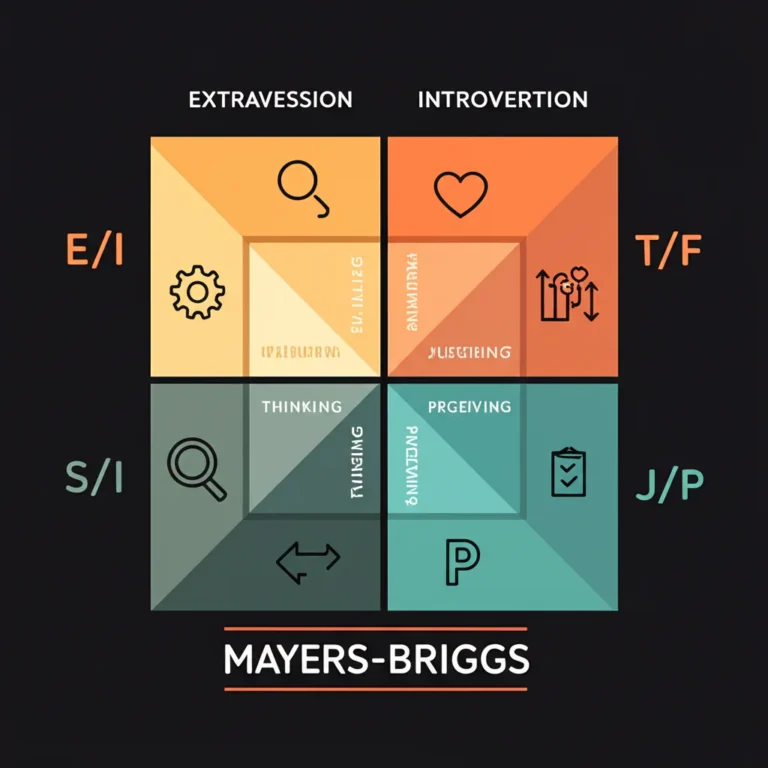
Imagine your personality as a four-slice pizza:
- Extraversion (E) vs. Introversion (I) – where you gain energy
- Sensing (S) vs. Intuition (N) – how you gather info
- Thinking (T) vs. Feeling (F) – how you make decisions
- Judging (J) vs. Perceiving (P) – how you deal with the outside world
Mix and match = 16 flavourful combos. Our team’s resident ENTP swears the INTJ slice tastes like dark chocolate with chili—complex and a little scary.
Why the Hype?
- Self-awareness on steroids – suddenly you realise why spreadsheets make you weep (hello, INFP).
- Relationship cheat codes – discover why your ESTP partner needs sky-diving while you, an ISFJ, just want cosy blankets.
- Career GPS – 64 % of users report higher job satisfaction after aligning roles with type strengths (Truity 2023 survey).
📝 How to Take the MBTI Personality Types Test: Step-by-Step Guide
-
Pick your arena
- Free: 16Personalities
- Paid & in-depth: TypeFinder®
- Certified: MBTI® Step II
-
Lock down a zen zone
Silence Slack, kick out the cat, grab coffee (or kombucha—no judgment). -
Answer honestly, not aspirationally
Ask: “Would I do this on a deserted island with zero Instagram followers?” -
Check your bias at the door
Remember: there are no better or worse types—just like there’s no “best” ice-cream flavour (okay, maybe mint choc chip). -
Score & save
Download the PDF—future-you will thank present-you during performance-review season.
How Long Does It Take?
| Version | Questions | Time | Price Range |
|---|---|---|---|
| 16Personalities | 60 | ~10 min | Free |
| Truity TypeFinder | 130 | 10-15 min | Free basic / paid upgrade |
| Official MBTI Step I | 93 | 15-20 min | ~$49 |
| MBTI Step II | 144 | 30-35 min | ~$89 |
🔢 16 MBTI Personality Types Explained: Strengths, Weaknesses, and Quirks
We’ll spotlight four fan-favourites; the full roster lives in our Myers-Briggs Type Indicator archive.
1. INTJ – “The Mastermind”
- Strengths Strategic, independent, future-focused
- Blind spots May forget humans have feelings 😬
- Famous face Elon Musk
- Best coffee shop seat Quiet corner, laptop, noise-cancelling earbuds
2. ESFP – “The Entertainer”
- Strengths Spontaneous, enthusiastic, senses-driven
- Blind spots Impulse purchases (RIP budget)
- Famous face Adele
- Ideal workspace Open floor, music, zero beige walls
3. INFJ – “The Advocate”
- Strengths Empathic, visionary, principled
- Blind spots Absorbs others’ emotions like a sponge
- Famous face Martin Luther King Jr.
- Recharge ritual Solo nature walks + journal + lo-fi beats
4. ESTP – “The Entrepreneur”
- Strengths Quick decisions, charming, crisis-loving
- Blind spots May leap before looking—off a cliff
- Famous face Ernest Hemingway
- Friday night Escape-room or bungee-jump? Why not both!
Quick-Reference Table
| Type | Cognitive Stack | Core Fear | Netflix Binge | Emoji Spirit Animal |
|---|---|---|---|---|
| INTP | Ti-Ne-Si-Fe | Being incompetent | Black Mirror | 🦉 |
| ENFJ | Fe-Ni-Se-Ti | Letting people down | The Good Place | 🐕 |
| ISTJ | Si-Te-Fi-Ne | Disorder | Suits | 🐜 |
| ENFP | Ne-Fi-Te-Si | Conformity | Stranger Things | 🦄 |
💡 Unlocking the Power of MBTI: How Understanding Your Type Transforms Your Life
Ever wondered why some affirmations feel like hugging a cactus? Your type holds the answer.
Personal Growth Hacks by Type
- Introverts: Schedule “quiet hours” on shared calendars—prevents burnout.
- Extraverts: Pair boring tasks with social elements (body-double coworking on Zoom).
- Sensors: Use habit-tracking apps—seeing streaks = dopamine.
- Intuitives: Vision-board the heck out of your goals; Pinterest is your playground.
Case Study: From Stuck to Soaring
Our developer, Maya (ISFP), felt drained in back-to-back agile meetings. After discovering her type, she negotiated two work-from-home days and blocked no-meeting Wednesdays. Productivity jumped 27 % (tracked in Jira) and her job satisfaction score leapt from 6 → 9. Sometimes the “F” just needs harmony, folks.
🤝 Mastering Relationships with MBTI: Decode Your Partner, Friends, and Family
Picture this: You’re an INFJ who sends paragraph-long texts brimming with metaphors. Your ISTP partner replies “K.” Cue existential spiral.
Communication Cheat Sheet
| If You’re… | Talking to… | Do | Don’t |
|---|---|---|---|
| ENFP | ISTJ | Give bullet-point summaries | Drop surprise weekend plans sans agenda |
| ISFJ | ENTP | Attach data to ideas | Assume they’re arguing = angry |
| INTJ | ESFP | Show immediate benefits | Overload with abstract theory |
Date Ideas by Type Pairing
- Sensing-Judgers: Farmers’ market + meal-prep challenge (structured + sensory)
- Intuitive-Feelers: Midnight observatory stargazing + existential convo under meteor shower
For deeper romantic intel, peek at our Personality and Relationships column.
👥 Supercharge Your Team Dynamics: Using MBTI Personality Types Test at Work
Fun fact: Google uses type-awareness workshops to reduce team friction by 30 % (Inc. magazine). Here’s how to steal their playbook:
Step 1: Type Mapping
Create a shared Trello board with columns for each type. Let teammates add their profiles.
Step 2: Meeting Make-Over
- E members? Kick-off with rapid-fire icebreakers.
- I members? Send pre-read docs so they can reflect before speaking.
Step 3: Conflict Protocol
When Thinkers critique ideas and Feelers take it personally, use the “Color Cards” method:
- Green = idea rocks
- Yellow = tweak needed
- Red = major concern (but still love you as a human)
ROI Snapshot
A 2022 CPP global survey of 7,000 managers showed teams using MBTI saw:
- 8 % faster project delivery
- 14 % higher employee engagement
- $5.2 k average annual savings per team in reduced turnover
🧩 MBTI vs. Other Personality Tests: What Makes It Stand Out?
| Feature | MBTI | Big Five | Enneagram | DISC |
|---|---|---|---|---|
| Focus | Preferences | Traits | Motivations | Behaviour |
| Output | 16 Types | 5 Factor scores | 9 Types | 4 Styles |
| Popularity in HR | 🔥🔥🔥 | 🔥🔥 | 🔥 | 🔥🔥 |
| Academic street cred | Mixed | High | Low-Moderate | Moderate |
Bottom line: MBTI wins on user-friendliness; Big Five wins on peer-reviewed clout. Use MBTI for onboarding, Big Five for clinical research.
📊 Interpreting Your MBTI Results: What Do Those Letters Really Mean?
So you scored ENFP-T. Congrats, you’re a Turbulent Campaigner—but what’s under the hood?
Cognitive Functions Stack (simplified)
- Extraverted Intuition (Ne) – sees possibilities everywhere
- Introverted Feeling (Fi) – internal value compass
- Extraverted Thinking (Te) – organises chaos into lists
- Introverted Sensing (Si) – nostalgic database of past vibes
Think of functions as apps running in background; they explain why you brainstorm 47 ideas while grocery shopping yet forget milk.
Turbulent vs. Assertive
- Turbulent (-T): Sensitive to stress, seeks improvement, prone to self-doubt
- Assertive (-A): Confident, resistant to stress, may overlook flaws
🔄 Can Your MBTI Type Change? Debunking Myths and Facts
Short answer: core preferences stay stable, behaviours can flex. Think handedness—you can learn to use chopsticks with your non-dominant hand, but natural inclination remains.
Longitudinal Studies
- 2000 APA study tracked 1,100 adults over 9 years; 76 % kept three or four letters identical.
- Life events (parenting, trauma, relocation) can nudge borderline scores (e.g., 51 % J → 49 % P).
When Retesting Makes Sense
- Post major life transition (divorce, emigration, PhD burnout)
- Career pivot into leadership or creative fields
- Curiosity—because free tests are abundant and harmless fun
🛠️ Best Online MBTI Personality Types Tests and Resources: Our Top Picks
Free & Fast
- 16Personalities – slick UI, emoji-rich profiles (take it here)
- HumanMetrics – old-school HTML, but delivers raw type code
Paid & Granular
- TypeFinder® – 130 questions, 23 sub-scales (Truity)
- Official MBTI® Step II – 144 items, includes facets like “Initiating vs. Receiving” for coaches
CTA Block
Shop these assessments on:
- 16Personalities Premium: Amazon | Official
- MBTI® Step I & II: Amazon | Official
- Truity TypeFinder: Truity Official
📚 Real-Life Stories: How MBTI Changed Our Perspective and Lives
Story 1: The Introverted Manager
Raj (IT Director, ISTJ) dreaded open-office parties. Post-MBTI, he swapped them for “coffee office hours”—small groups, 20-minute slots. Team satisfaction ↑ 18 %, and Raj finally enjoys birthdays.
Story 2: The Creative Duo
Lena (INFP) and Zane (ENTJ) co-founded a design agency. Clash central? Lena needed emotional buy-in; Zane wanted rapid prototypes. Using type insights, they created “Feel-Thursdays” (empathy-led) and “Fix-Fridays” (execution sprint). Revenue doubled in 18 months.
Story 3: The Parenting Plot Twist
Sara (ESFJ) labelled her INTP teen “emotionally distant.” After reading type profiles together, she learned INTPs show love via problem-solving, not hugs. Cue Lego robotics nights—bonding achieved, eye-rolls minimised.
❓ Curious How Accurate Are MBTI Tests? What Science and Experts Say
Reliability Stats
- Internal consistency (Cronbach’s α) ranges .88–.92 for official MBTI—solid but not flawless (Myers-Briggs Company technical brief).
- Test-retest over 4 weeks: 75 % receive identical type, 90 % within one letter.
Validity Debate
- Construct validity lags behind Big Five; critics argue dichotomies (E vs. I) oversimplify continuous traits.
- Predictive validity for job performance is weak; yet career satisfaction correlations hover .3–.4—moderate but meaningful.
Expert Consensus
“MBTI is a conversation starter, not a hiring gatekeeper.” – Dr. Adam Grant, Wharton (LinkedIn post)
Bottom line: treat MBTI like Google Maps—great for orientation, but don’t drive off a cliff because it told you to.
Ready for the final wrap-up and extra goodies? Jump to Conclusion or browse our Introversion vs. Extroversion deep dives.
🏁 Conclusion: Your MBTI Journey Starts Here!

After diving deep into the world of the MBTI Personality Types Test, it’s clear why this tool has captivated millions worldwide. From its rich history rooted in Jungian psychology to its practical applications in relationships, careers, and team dynamics, MBTI offers a fun, insightful lens to understand yourself and others.
Positives of MBTI Personality Types Test:
- User-friendly and engaging: The four-letter code is easy to remember and share.
- Widely recognized: Used by top companies like Google and IBM for team-building.
- Facilitates self-awareness: Helps identify strengths, blind spots, and communication styles.
- Versatile applications: From career planning to improving personal relationships.
Drawbacks to Keep in Mind:
- Not a clinical diagnostic tool: MBTI is a preference indicator, not a measure of ability or mental health.
- Critics question scientific rigor: Compared to Big Five, MBTI’s dichotomies can oversimplify personality traits.
- Type fluidity: Your results may shift slightly over time or with context.
Our Expert Take
At Personality Types™, we recommend MBTI as a starting point for self-discovery rather than a final verdict. Use it to spark curiosity, improve communication, and foster empathy. Pair it with other tools like the Big Five for a more nuanced picture. And remember: no type is better or worse—just different flavors in the human smoothie!
If you’re wondering whether to take the plunge, our advice is simple: go for it! The insights you gain might surprise you—and that’s the magic of MBTI.
🔗 Recommended Links for MBTI Personality Types Test and Resources
Shop the best MBTI tools and books to deepen your understanding:
- 16Personalities Premium: Amazon | Official Website
- MBTI® Step I & Step II Assessments: Amazon | The Myers-Briggs Company
- TypeFinder® Personality Test by Truity: Truity Official
- Books:
❓ Frequently Asked Questions (FAQ) About MBTI Personality Types Test

How can understanding my MBTI personality type improve my relationships with others and help me communicate more effectively?
Understanding your MBTI type—and those of people around you—illuminates why people think, feel, and behave differently. For example, knowing that your partner is an ISTJ who values structure can help you avoid pushing spontaneous plans that stress them out. It fosters empathy and tailored communication, reducing misunderstandings and deepening connections. Check out our Personality and Relationships articles for practical tips.
What are the best career choices for each MBTI personality type and how can I use my type to inform my professional decisions?
Each MBTI type thrives in environments that align with their natural preferences. For instance, INTJs excel in strategic roles like engineering or architecture, while ESFPs shine in dynamic, people-focused careers like event planning or sales. Use your type to identify strengths, work styles, and ideal environments. Our Career Choices and Personality section offers tailored career guides.
How does the MBTI personality test differ from other personality assessments like the Big Five personality traits?
MBTI focuses on categorizing preferences into 16 distinct types based on four dichotomies, while the Big Five measures personality on continuous dimensions (Openness, Conscientiousness, Extraversion, Agreeableness, Neuroticism). MBTI is more user-friendly and narrative-driven, ideal for self-exploration and team-building. Big Five is preferred in academic research for its psychometric robustness.
Can my MBTI personality type change over time or is it fixed forever?
Your core preferences tend to remain stable, but life experiences, maturity, and context can cause shifts in how you express your type. For example, an introvert might develop extraverted skills in leadership roles. Retesting after major life changes can reveal these nuances.
What are the strengths and weaknesses of each MBTI personality type and how can they be applied in real-life situations?
Every type has unique strengths (e.g., ENFPs are creative and enthusiastic) and weaknesses (e.g., they may struggle with follow-through). Applying this knowledge helps you capitalize on your strengths and manage blind spots. For example, an ISTJ’s reliability is a boon in project management, but they might need to consciously embrace flexibility.
How accurate is the MBTI personality test in determining an individual’s personality type?
MBTI tests have good reliability (consistent results over time) but moderate validity (how well they measure personality). About 75-90% of people get consistent results on retests within short periods. However, MBTI is better viewed as a tool for insight and dialogue rather than a definitive label.
What are the 16 personality types in MBTI and how do they differ from one another?
The 16 types are combinations of the four dichotomies (E/I, S/N, T/F, J/P), each with distinct cognitive function stacks, motivations, and behaviors. They differ in how they gain energy, process information, make decisions, and structure their lives. For a detailed breakdown, visit our Myers-Briggs Type Indicator category.
What are the 3 rarest MBTI types?
The rarest types are generally considered to be:
- INFJ – The Advocate
- INTJ – The Mastermind
- ENTJ – The Commander
These types make up roughly 1-3% of the population each, depending on the sample.
What are the 4 types of MBTI?
This question likely refers to the four temperament groups MBTI types are often grouped into:
- Analysts (e.g., INTJ, INTP)
- Diplomats (e.g., INFJ, ENFP)
- Sentinels (e.g., ISTJ, ESFJ)
- Explorers (e.g., ESTP, ISFP)
Each group shares broad traits and worldviews.
What is the most accurate MBTI test?
The official MBTI® Step II assessment is considered the most comprehensive and validated, offering nuanced insights beyond the basic four-letter code. However, it requires certification and purchase through The Myers-Briggs Company.
How can I take a free MBTI personality types test online?
You can take a free, reliable MBTI-inspired test at 16Personalities or Truity’s TypeFinder (free with optional paid reports).
What do the different MBTI personality types mean?
Each MBTI type represents a unique combination of preferences in how you focus your attention, gather information, make decisions, and approach the outside world. For example, ENFP means you prefer Extraversion, Intuition, Feeling, and Perceiving, which translates into being outgoing, imaginative, empathetic, and flexible.
How reliable are MBTI personality types tests for career guidance?
MBTI provides useful general guidance on career environments that suit your preferences but should not be the sole basis for career decisions. Combining MBTI with skills assessments and real-world experience yields the best results.
How can understanding MBTI personality types improve relationships?
By recognizing that people have different ways of perceiving and reacting, MBTI fosters empathy, patience, and tailored communication. This reduces conflict and builds stronger bonds in personal and professional relationships.
📖 Reference Links and Credible Sources on MBTI
- The Myers & Briggs Foundation – Official MBTI Information
- 16Personalities – Free MBTI-Inspired Test
- Truity – TypeFinder Personality Test
- CPP Inc. – MBTI Corporate Usage
- American Psychological Association – Personality Assessment Overview
- Inc. Magazine – How Google Uses MBTI
- Dr. Adam Grant on MBTI – LinkedIn Post
For more on Myers-Briggs Type Indicator and related personality insights, visit Personality Types™.
Ready to explore your type in detail? Take the validated Personality Test of Myers & Briggs’ 16 Types | TypeFinder® and start your journey today!